Has the product design reform at Jiangnan University been successful?
Feb 28, 2022
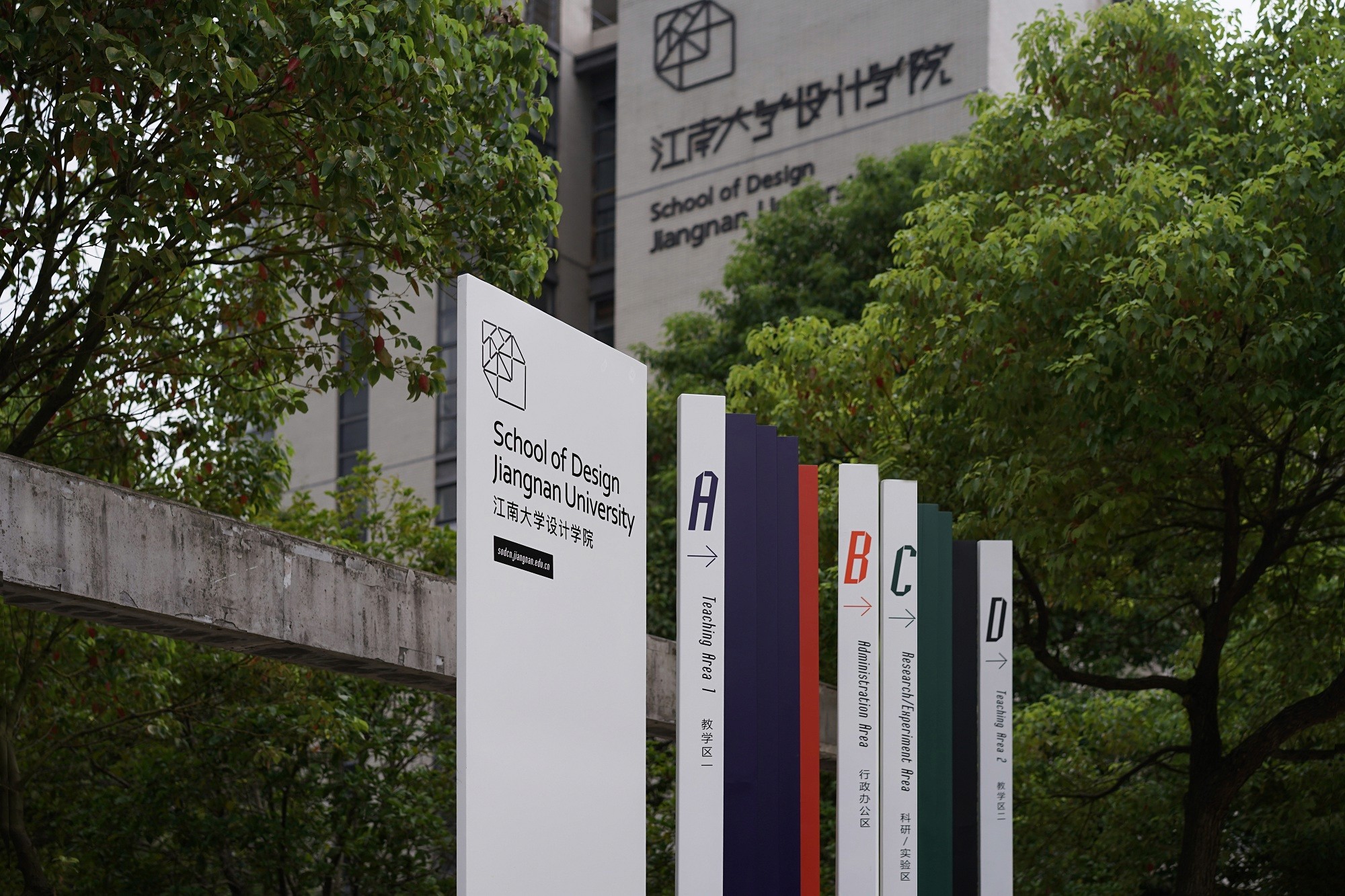
Entered the school in 2020, just happened to be the year of the 60th anniversary of the School of Design, Jiangnan University, and also the first year that Professor Xin Xiangyang left the School of Design. In this year, there has been a radical reform of the curriculum, eliminating many so-called 'old systems' and 'old methods', taking the first step in curriculum reform, which is to change the basic courses of the freshman year from traditional basic courses such as design sketching and color design to more effective teaching arrangements such as design elements and design expression. Four years later, the first batch of undergraduate graduates after the reform of the Product Design and Industrial Design departments are about to face a 'quality inspection'. What is the effect of the curriculum reform? Has there been a significant improvement compared to before? Have we really achieved the educational goal of fostering virtue and nurturing talent? As a product design major student who ranks in the top 25% academically, I have the qualifications to make judgments.
Curriculum reform is forward-looking but overly idealistic
Curriculum reform is actually a 'rejection and abandonment' of the original training program. In the freshman year, we abandoned traditional basic courses such as design sketching and color design, and added more interesting and design-focused courses such as design elements, design thinking, and design technology. In fact, we have indeed benefited a lot from them. We started to work on complete design projects much earlier than students in other schools. However, the content of the courses is very superficial. In terms of design thinking, it should be the core thinking of all design fields, teaching students what design is, what the goals of design are, and the responsibilities of designers in contemporary society, so that students can learn design with a sense of direction, especially in establishing the right evaluation criteria. In contrast, our course content is numerous design methodologies, and the final presentation is often a pile of design methods without any rationale. This can be fully reflected in the final thesis. Some students don't know what method to use or use methods that are not suitable. In my opinion, design methods should not be applied without any modifications, and unique design methods should be produced based on actual projects. In the sophomore year, we removed software courses, hoping that students could study on their own. This idea is good because software, as a design tool, does not need to be taught as a standalone course, and limited class time should be used for more meaningful subjects. However, except for me, the entire class still signed up for expensive software courses, and the effect of project-based teaching was not good. There were even many students who came to me for help in self-learning software. This phenomenon is truly surprising for undergraduate students from a prestigious university. In the junior year, which is the most intensive year for core professional courses, almost all courses require group work, even if one person can complete the task alone. The groups in the class have solidified: the top students formed groups with other top students, and average students formed groups with other average students. Only the students with lower abilities had no groups, and it's not because they are bad people, but just because they have slightly lower abilities. If no one is willing to accept them, it is a problem for the future. However, this situation still persists in the final year, and it does not affect the graduation and further studies. The students who advocate making contributions to society are indifferent to the people around them, which is truly ridiculous.
Rampant chaos in group assignments but lacking supervision
Speaking of group assignments, it can be described as chaotic, and the teachers have no countermeasures. Even if they know about the problems, they do not try to resolve them. Whether it is students or teachers, everyone is just for themselves. There is a representative figure, let's call her 'X', who is a product of this abnormal system. With excellent grades, she led the class for almost the first three years. However, from looking at her work, she is the type of student who lacks natural talent and only relies on hard work. In other words, she is willing to do anything to make up for her lack of talent, including but not limited to pleading with teachers for better grades, pressuring group members to do the work, forcing her roommate out of the dormitory, bullying classmates, acting in her own self-interest, and using all the relationships around her... It seems as if her GPA is the most important thing to her, and nothing else matters. In the end, her wish was fulfilled as she secured a place for further studies with a high GPA, but unfortunately, she was reported by her group members for 'disrespecting the teachers' and was deemed to have poor conduct. Group assignments were originally a good way to train teamwork, but under high pressure and lack of supervision, they have grown out of control. In the end, they fail to achieve the primary purpose of fostering virtue and nurturing talent, let alone developing the students' professional abilities. There is not just one student like her, but rather the majority of the entire year group, she is just the most typical. What about the others? Those who excelled went to top design schools such as Tsinghua University and Tongji University, simply because they were more skilled in using certain means.
Obvious shortfalls in both Product Design and Industrial Design
Product design and industrial design were originally the same major, merging students from science and arts backgrounds to understand each other and complement each other. However, due to management constraints, these were split into two separate majors. Under the premise of two separate majors, each focused on its own development. To summarize, product design emphasizes the conceptual stage, while industrial design focuses on the practical implementation stage. In reality, it is as if one major lacks the left leg and the other lacks the right leg: students in product design can develop creative designs but lack meaningful feasibility analysis, resulting in their work being like castles in the air; students in industrial design can produce physical works, but they seem to lack significance and necessity. The viewpoints of the teachers from both disciplines are still very divergent, but the correct path for design is in combining the two.
Chaotic and erroneous course arrangements
One of the most memorable courses for me is a course on the inheritance and innovation of national crafts. According to the training program published on the Academic Affairs Office's website, this course can be optional, but the response from the department head was that it is a mandatory course. After students checked one by one and confirmed that it could indeed be optional, they had to communicate with the department head again, only to find that the department head had miscalculated the credits... This is truly astonishing. In addition to this, the training program is adjusted in minute details every year, and there was even a course that started earlier without modifying the training program. This made it very difficult for senior students who needed to make up for missed courses. If there hadn't been enough time, they might have been delayed in graduating. The course modifications are too casual and do not take into account the students' needs.
From the perspective of the curriculum at the School of Design, Jiangnan University, it seems forward-looking and progressive in terms of curriculum design, but from an implementation perspective, it is not perfect and is too idealistic. From the perspective of education, people's hearts have already deteriorated...
Has the product design reform at Jiangnan University been successful?
Feb 28, 2022
Entered the school in 2020, just happened to be the year of the 60th anniversary of the School of Design, Jiangnan University, and also the first year that Professor Xin Xiangyang left the School of Design. In this year, there has been a radical reform of the curriculum, eliminating many so-called 'old systems' and 'old methods', taking the first step in curriculum reform, which is to change the basic courses of the freshman year from traditional basic courses such as design sketching and color design to more effective teaching arrangements such as design elements and design expression. Four years later, the first batch of undergraduate graduates after the reform of the Product Design and Industrial Design departments are about to face a 'quality inspection'. What is the effect of the curriculum reform? Has there been a significant improvement compared to before? Have we really achieved the educational goal of fostering virtue and nurturing talent? As a product design major student who ranks in the top 25% academically, I have the qualifications to make judgments.
Curriculum reform is forward-looking but overly idealistic
Curriculum reform is actually a 'rejection and abandonment' of the original training program. In the freshman year, we abandoned traditional basic courses such as design sketching and color design, and added more interesting and design-focused courses such as design elements, design thinking, and design technology. In fact, we have indeed benefited a lot from them. We started to work on complete design projects much earlier than students in other schools. However, the content of the courses is very superficial. In terms of design thinking, it should be the core thinking of all design fields, teaching students what design is, what the goals of design are, and the responsibilities of designers in contemporary society, so that students can learn design with a sense of direction, especially in establishing the right evaluation criteria. In contrast, our course content is numerous design methodologies, and the final presentation is often a pile of design methods without any rationale. This can be fully reflected in the final thesis. Some students don't know what method to use or use methods that are not suitable. In my opinion, design methods should not be applied without any modifications, and unique design methods should be produced based on actual projects. In the sophomore year, we removed software courses, hoping that students could study on their own. This idea is good because software, as a design tool, does not need to be taught as a standalone course, and limited class time should be used for more meaningful subjects. However, except for me, the entire class still signed up for expensive software courses, and the effect of project-based teaching was not good. There were even many students who came to me for help in self-learning software. This phenomenon is truly surprising for undergraduate students from a prestigious university. In the junior year, which is the most intensive year for core professional courses, almost all courses require group work, even if one person can complete the task alone. The groups in the class have solidified: the top students formed groups with other top students, and average students formed groups with other average students. Only the students with lower abilities had no groups, and it's not because they are bad people, but just because they have slightly lower abilities. If no one is willing to accept them, it is a problem for the future. However, this situation still persists in the final year, and it does not affect the graduation and further studies. The students who advocate making contributions to society are indifferent to the people around them, which is truly ridiculous.
Rampant chaos in group assignments but lacking supervision
Speaking of group assignments, it can be described as chaotic, and the teachers have no countermeasures. Even if they know about the problems, they do not try to resolve them. Whether it is students or teachers, everyone is just for themselves. There is a representative figure, let's call her 'X', who is a product of this abnormal system. With excellent grades, she led the class for almost the first three years. However, from looking at her work, she is the type of student who lacks natural talent and only relies on hard work. In other words, she is willing to do anything to make up for her lack of talent, including but not limited to pleading with teachers for better grades, pressuring group members to do the work, forcing her roommate out of the dormitory, bullying classmates, acting in her own self-interest, and using all the relationships around her... It seems as if her GPA is the most important thing to her, and nothing else matters. In the end, her wish was fulfilled as she secured a place for further studies with a high GPA, but unfortunately, she was reported by her group members for 'disrespecting the teachers' and was deemed to have poor conduct. Group assignments were originally a good way to train teamwork, but under high pressure and lack of supervision, they have grown out of control. In the end, they fail to achieve the primary purpose of fostering virtue and nurturing talent, let alone developing the students' professional abilities. There is not just one student like her, but rather the majority of the entire year group, she is just the most typical. What about the others? Those who excelled went to top design schools such as Tsinghua University and Tongji University, simply because they were more skilled in using certain means.
Obvious shortfalls in both Product Design and Industrial Design
Product design and industrial design were originally the same major, merging students from science and arts backgrounds to understand each other and complement each other. However, due to management constraints, these were split into two separate majors. Under the premise of two separate majors, each focused on its own development. To summarize, product design emphasizes the conceptual stage, while industrial design focuses on the practical implementation stage. In reality, it is as if one major lacks the left leg and the other lacks the right leg: students in product design can develop creative designs but lack meaningful feasibility analysis, resulting in their work being like castles in the air; students in industrial design can produce physical works, but they seem to lack significance and necessity. The viewpoints of the teachers from both disciplines are still very divergent, but the correct path for design is in combining the two.
Chaotic and erroneous course arrangements
One of the most memorable courses for me is a course on the inheritance and innovation of national crafts. According to the training program published on the Academic Affairs Office's website, this course can be optional, but the response from the department head was that it is a mandatory course. After students checked one by one and confirmed that it could indeed be optional, they had to communicate with the department head again, only to find that the department head had miscalculated the credits... This is truly astonishing. In addition to this, the training program is adjusted in minute details every year, and there was even a course that started earlier without modifying the training program. This made it very difficult for senior students who needed to make up for missed courses. If there hadn't been enough time, they might have been delayed in graduating. The course modifications are too casual and do not take into account the students' needs.
From the perspective of the curriculum at the School of Design, Jiangnan University, it seems forward-looking and progressive in terms of curriculum design, but from an implementation perspective, it is not perfect and is too idealistic. From the perspective of education, people's hearts have already deteriorated...
Has the product design reform at Jiangnan University been successful?
Feb 28, 2022
Entered the school in 2020, just happened to be the year of the 60th anniversary of the School of Design, Jiangnan University, and also the first year that Professor Xin Xiangyang left the School of Design. In this year, there has been a radical reform of the curriculum, eliminating many so-called 'old systems' and 'old methods', taking the first step in curriculum reform, which is to change the basic courses of the freshman year from traditional basic courses such as design sketching and color design to more effective teaching arrangements such as design elements and design expression. Four years later, the first batch of undergraduate graduates after the reform of the Product Design and Industrial Design departments are about to face a 'quality inspection'. What is the effect of the curriculum reform? Has there been a significant improvement compared to before? Have we really achieved the educational goal of fostering virtue and nurturing talent? As a product design major student who ranks in the top 25% academically, I have the qualifications to make judgments.
Curriculum reform is forward-looking but overly idealistic
Curriculum reform is actually a 'rejection and abandonment' of the original training program. In the freshman year, we abandoned traditional basic courses such as design sketching and color design, and added more interesting and design-focused courses such as design elements, design thinking, and design technology. In fact, we have indeed benefited a lot from them. We started to work on complete design projects much earlier than students in other schools. However, the content of the courses is very superficial. In terms of design thinking, it should be the core thinking of all design fields, teaching students what design is, what the goals of design are, and the responsibilities of designers in contemporary society, so that students can learn design with a sense of direction, especially in establishing the right evaluation criteria. In contrast, our course content is numerous design methodologies, and the final presentation is often a pile of design methods without any rationale. This can be fully reflected in the final thesis. Some students don't know what method to use or use methods that are not suitable. In my opinion, design methods should not be applied without any modifications, and unique design methods should be produced based on actual projects. In the sophomore year, we removed software courses, hoping that students could study on their own. This idea is good because software, as a design tool, does not need to be taught as a standalone course, and limited class time should be used for more meaningful subjects. However, except for me, the entire class still signed up for expensive software courses, and the effect of project-based teaching was not good. There were even many students who came to me for help in self-learning software. This phenomenon is truly surprising for undergraduate students from a prestigious university. In the junior year, which is the most intensive year for core professional courses, almost all courses require group work, even if one person can complete the task alone. The groups in the class have solidified: the top students formed groups with other top students, and average students formed groups with other average students. Only the students with lower abilities had no groups, and it's not because they are bad people, but just because they have slightly lower abilities. If no one is willing to accept them, it is a problem for the future. However, this situation still persists in the final year, and it does not affect the graduation and further studies. The students who advocate making contributions to society are indifferent to the people around them, which is truly ridiculous.
Rampant chaos in group assignments but lacking supervision
Speaking of group assignments, it can be described as chaotic, and the teachers have no countermeasures. Even if they know about the problems, they do not try to resolve them. Whether it is students or teachers, everyone is just for themselves. There is a representative figure, let's call her 'X', who is a product of this abnormal system. With excellent grades, she led the class for almost the first three years. However, from looking at her work, she is the type of student who lacks natural talent and only relies on hard work. In other words, she is willing to do anything to make up for her lack of talent, including but not limited to pleading with teachers for better grades, pressuring group members to do the work, forcing her roommate out of the dormitory, bullying classmates, acting in her own self-interest, and using all the relationships around her... It seems as if her GPA is the most important thing to her, and nothing else matters. In the end, her wish was fulfilled as she secured a place for further studies with a high GPA, but unfortunately, she was reported by her group members for 'disrespecting the teachers' and was deemed to have poor conduct. Group assignments were originally a good way to train teamwork, but under high pressure and lack of supervision, they have grown out of control. In the end, they fail to achieve the primary purpose of fostering virtue and nurturing talent, let alone developing the students' professional abilities. There is not just one student like her, but rather the majority of the entire year group, she is just the most typical. What about the others? Those who excelled went to top design schools such as Tsinghua University and Tongji University, simply because they were more skilled in using certain means.
Obvious shortfalls in both Product Design and Industrial Design
Product design and industrial design were originally the same major, merging students from science and arts backgrounds to understand each other and complement each other. However, due to management constraints, these were split into two separate majors. Under the premise of two separate majors, each focused on its own development. To summarize, product design emphasizes the conceptual stage, while industrial design focuses on the practical implementation stage. In reality, it is as if one major lacks the left leg and the other lacks the right leg: students in product design can develop creative designs but lack meaningful feasibility analysis, resulting in their work being like castles in the air; students in industrial design can produce physical works, but they seem to lack significance and necessity. The viewpoints of the teachers from both disciplines are still very divergent, but the correct path for design is in combining the two.
Chaotic and erroneous course arrangements
One of the most memorable courses for me is a course on the inheritance and innovation of national crafts. According to the training program published on the Academic Affairs Office's website, this course can be optional, but the response from the department head was that it is a mandatory course. After students checked one by one and confirmed that it could indeed be optional, they had to communicate with the department head again, only to find that the department head had miscalculated the credits... This is truly astonishing. In addition to this, the training program is adjusted in minute details every year, and there was even a course that started earlier without modifying the training program. This made it very difficult for senior students who needed to make up for missed courses. If there hadn't been enough time, they might have been delayed in graduating. The course modifications are too casual and do not take into account the students' needs.
From the perspective of the curriculum at the School of Design, Jiangnan University, it seems forward-looking and progressive in terms of curriculum design, but from an implementation perspective, it is not perfect and is too idealistic. From the perspective of education, people's hearts have already deteriorated...